
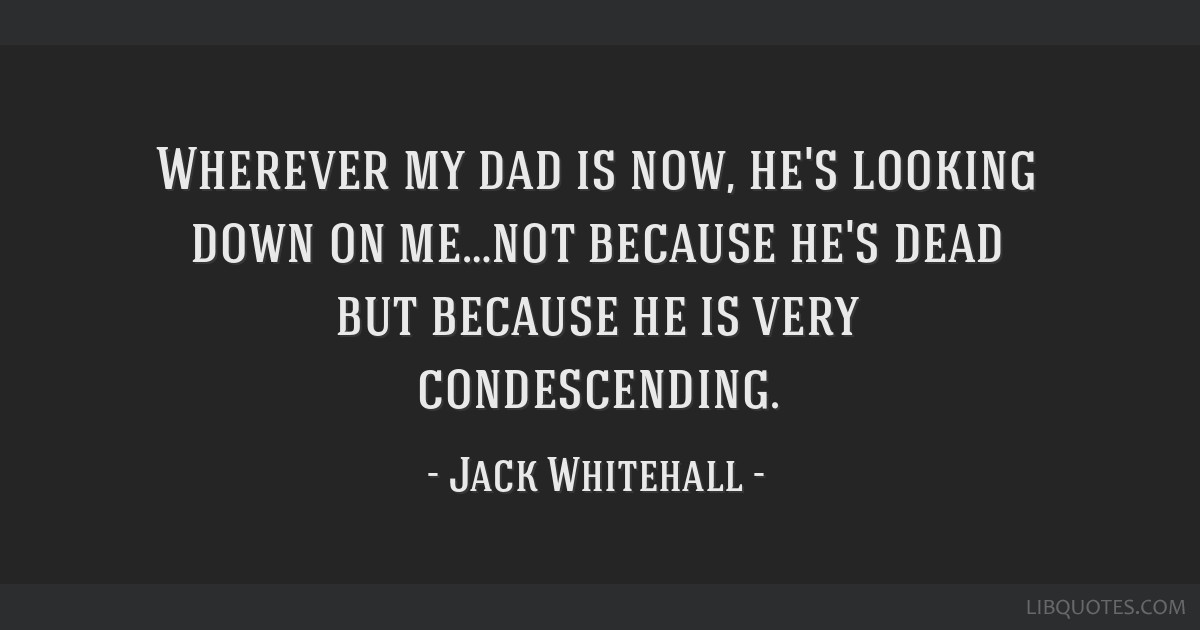
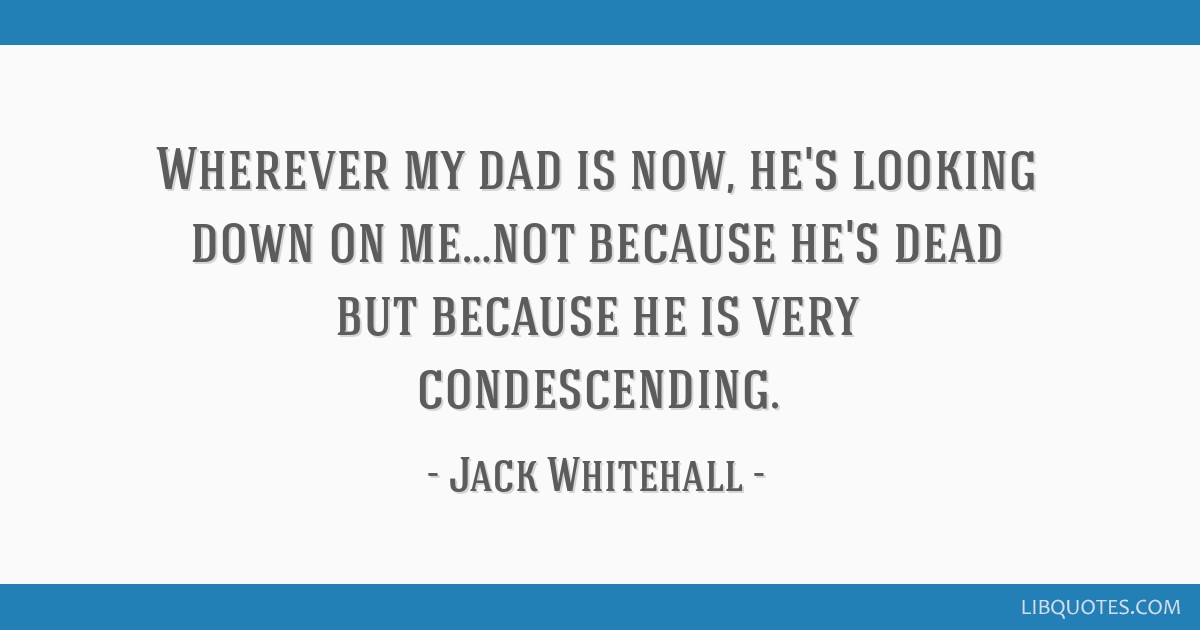
Jack Whitehall once joked, “I’m sure wherever my dad is, he’s looking down on us. He’s not dead—just very disappointed.” The line, delivered with his signature deadpan charm, isn’t just a gut-punch of British sarcasm—it’s a mirror held up to modern relationships, workplace dynamics, and the quiet absurdities of how we navigate truth in everyday life.
This quote, often shared as a “quote of the day” on comedy and motivation platforms, does more than make us laugh. It unpacks layers of emotional intelligence, generational friction, and the way humor functions as a survival mechanism in personal and professional spaces. Let’s dissect why this joke sticks—and what we can actually learn from it.
The Anatomy of a Comedy Truth Bomb
Comedians like Jack Whitehall don’t just tell jokes—they diagnose cultural behavior. His quote about his father isn’t really about parental disapproval. It’s about perception, projection, and the invisible weight of expectations.
When he says his dad is “looking down on us… not dead—just very disappointed,” he’s tapping into a universal experience: the feeling of being judged, even in the absence of direct confrontation. This isn’t just family humor. It’s workplace humor. It’s social anxiety dressed as wit.
Why this joke works: - It’s specific (father-son dynamics) yet broadly relatable - It uses understatement, a hallmark of British comedy - It disguises emotional vulnerability as sarcasm
In real life, many of us operate under the imagined gaze of authority figures—managers, mentors, parents—whose silence we interpret as disapproval. Whitehall turns that psychological burden into a punchline, but the insight remains: we’re often our own harshest critics, projecting judgment onto others to avoid confronting our insecurities.
Honesty Wrapped in Sarcasm: A British Survival Tactic
British humor has long used irony and self-deprecation to discuss uncomfortable truths. Jack Whitehall, particularly in his travel documentaries with his father, Michael, weaponizes this tradition to explore authenticity.
In Jack Whitehall: Travels with My Father, the comedian documents a strained relationship softened by time, travel, and forced proximity. The quote about his dad “looking down” in disappointment isn’t isolated—it’s a recurring theme. But beneath the mockery is a slow, awkward journey toward honesty.
Real-life example: During a trip to Southeast Asia, Jack mocks his father’s outdated views and emotional reserve. But as episodes progress, the tone shifts. The jokes remain, but they’re layered with affection. The audience sees not just a comedian performing, but a son learning how to communicate with a man who never learned how to say “I love you.”
This reflects a broader truth: many people—especially in traditional work cultures—use humor to broach difficult conversations. Sarcasm becomes a proxy for honesty when directness feels risky.
Workplace parallel: A junior employee says, “I’m sure the boss is just thrilled with how late this report was,” after missing a deadline. The joke masks anxiety, but also calls out a real issue—poor time management—without sounding defensive.
Whitehall’s quote, then, isn’t just comedy. It’s a communication strategy: say the hard thing, but make it funny first.
Work Culture and the Myth of Emotional Availability
Jack Whitehall’s dynamic with his father mirrors a common workplace culture—particularly in corporate or hierarchical environments—where feedback is indirect, emotions are suppressed, and disapproval is implied, not stated.
His father, a former talent agent with a stiff upper lip, represents a generation that equated emotional restraint with professionalism. Sound familiar?
Modern work culture still struggles with this: - Managers avoid direct criticism, leading to confusion - Employees misinterpret silence as dissatisfaction - Teams rely on humor to navigate tension
Whitehall’s joke exposes the absurdity of this dynamic. If someone is “looking down on us” in disappointment without saying a word, how do we improve? How do we know what’s expected?
Practical takeaway: Create feedback loops that don’t depend on interpretation. Instead of letting subordinates guess your mood, normalize direct, kind communication. Replace passive judgment with active guidance.
For instance: > ❌ “I’m sure you’re very proud of how this turned out.” > ✅ “This is a good start. Let’s refine the data section together.”
The first relies on sarcasm (like Whitehall’s joke). The second builds trust.
Laughter has its place in the office—but clarity builds performance.
Human Nature and the Performance of Self
At its core, Whitehall’s quote speaks to the human tendency to perform—whether for parents, bosses, or peers. We adjust our behavior based on who we think is watching, even if they aren’t.
Psychologists call this “impression management.” Comedians call it material.
Jack Whitehall, both on stage and on screen, is obsessed with identity. He mocks his posh upbringing, his privilege, and his emotional immaturity precisely because he’s aware of how he’s perceived. The “disappointed dad” line isn’t just about Michael Whitehall—it’s about the internalized voice of judgment we all carry.
Common mistake: People assume honesty requires seriousness. But Whitehall proves that vulnerability can be delivered through humor. The moment he admits his dad is disappointed—even as a joke—he’s acknowledging a real emotional truth.
In work environments, leaders who use humor to admit mistakes (“I’m sure the client loved that typo in the proposal”) often build more trust than those who stay rigidly formal.
Why? Because they show they’re human.
Workflow tip: Use light humor to break tension during team retrospectives. Example: > “Let’s go around—what went well, what went poorly, and who do we blame?” Then follow with real reflection.
It lowers defenses and opens the door to honest feedback.
Why This Quote Resonates as “Quote of the Day”
Quotes go viral for one of two reasons: they inspire, or they validate.
Jack Whitehall’s line does the latter. It doesn’t tell us to “be better.” It says, “Yeah, I feel judged too—and isn’t that ridiculous?”
That’s why it’s shared as a “quote of the day.” It’s not motivational in the traditional sense. It’s relational. It connects people through shared experience.
Compare it to generic inspirational quotes like “Success is failure turned inside out.” True? Maybe. Relatable in the moment? Rarely.
Whitehall’s quote wins because: - It’s self-aware - It’s emotionally accurate - It acknowledges discomfort without pretending to fix it
In an age of curated perfection on social media, this kind of humor is a breath of fresh air. It’s honesty disguised as irony—and that’s powerful.
Applying the Lesson: From Joke to Real Change
So how do we take a comedian’s punchline and turn it into personal or professional growth?
Start by recognizing the patterns it reveals.
1. Name the unspoken: If you’re walking on eggshells around a colleague or manager, ask: “What am I assuming they think of me?” Then test that assumption with a direct but friendly question. Example: > “I noticed you were quiet in the meeting—anything you’d like me to adjust in the next draft?”
2. Use humor as a gateway, not a shield: It’s fine to joke about stress or mistakes. But follow it with action. > “I’m sure HR is thrilled about my vacation request timing… Anyway, here’s how I’ll cover my tasks.”
3. Normalize “disappointment” as feedback, not failure: Whitehall jokes about his dad’s disappointment, but in real life, he keeps showing up—on tour, on TV, in therapy. The joke isn’t an endpoint. It’s recognition.
In the workplace, reframe criticism. Instead of hearing “you disappointed me,” hear “here’s how we improve.”
Final Thought: The Power of Laughing at the Weight We Carry
Jack Whitehall’s quote works because it’s true, and because it’s funny, and because it’s both at the same time. It doesn’t solve the problem of parental expectations or workplace silence—but it names them. And in naming them, it makes them lighter.
We don’t need to eliminate judgment—our own or others’. We just need to stop pretending it’s not there.
So the next time you feel like someone is “looking down on you” in disappointment—whether it’s your boss, your parent, or your inner critic—say it out loud. Make a joke. Then ask the real question: “What do you actually need from me?”
That’s where honesty begins. And sometimes, it starts with a punchline.
FAQ
What should you look for in Jack Whitehall’s Quote of the Day: A Lesson in Humor and Honesty? Focus on relevance, practical value, and how well the solution matches real user intent.
Is Jack Whitehall’s Quote of the Day: A Lesson in Humor and Honesty suitable for beginners? That depends on the workflow, but a clear step-by-step approach usually makes it easier to start.
How do you compare options around Jack Whitehall’s Quote of the Day: A Lesson in Humor and Honesty? Compare features, trust signals, limitations, pricing, and ease of implementation.
What mistakes should you avoid? Avoid generic choices, weak validation, and decisions based only on marketing claims.
What is the next best step? Shortlist the most relevant options, validate them quickly, and refine from real-world results.



/cdn.vox-cdn.com/uploads/chorus_image/image/70269281/112379621.0.jpg)

